Overview
The integration of AI and Large Language Models (LLMs) into educational technology presents both tremendous opportunities and significant challenges. On one hand, AI can provide personalized tutoring, instant feedback, and 24/7 learning support that enhances educational outcomes. On the other hand, AI systems that simply provide answers can enable academic dishonesty, reduce critical thinking, and undermine the learning process. The challenge for educational technology providers is to leverage AI's capabilities while ensuring that it promotes genuine learning rather than shortcut-taking.

Traditional AI tutoring systems often fall into the trap of being too helpful—providing direct answers to student questions rather than guiding students to discover answers themselves. While this may seem helpful in the short term, it undermines learning by removing the cognitive effort required for genuine understanding. Students who receive direct answers may pass tests but fail to develop the problem-solving skills, critical thinking abilities, and deep understanding needed for long-term success.
Academic dishonesty is another critical concern. AI systems that provide direct answers can be used by students to complete assignments without learning, undermining the educational process and creating unfair advantages. This is particularly problematic in online learning environments where direct supervision is limited. Educational institutions need AI tools that support learning while maintaining academic integrity.
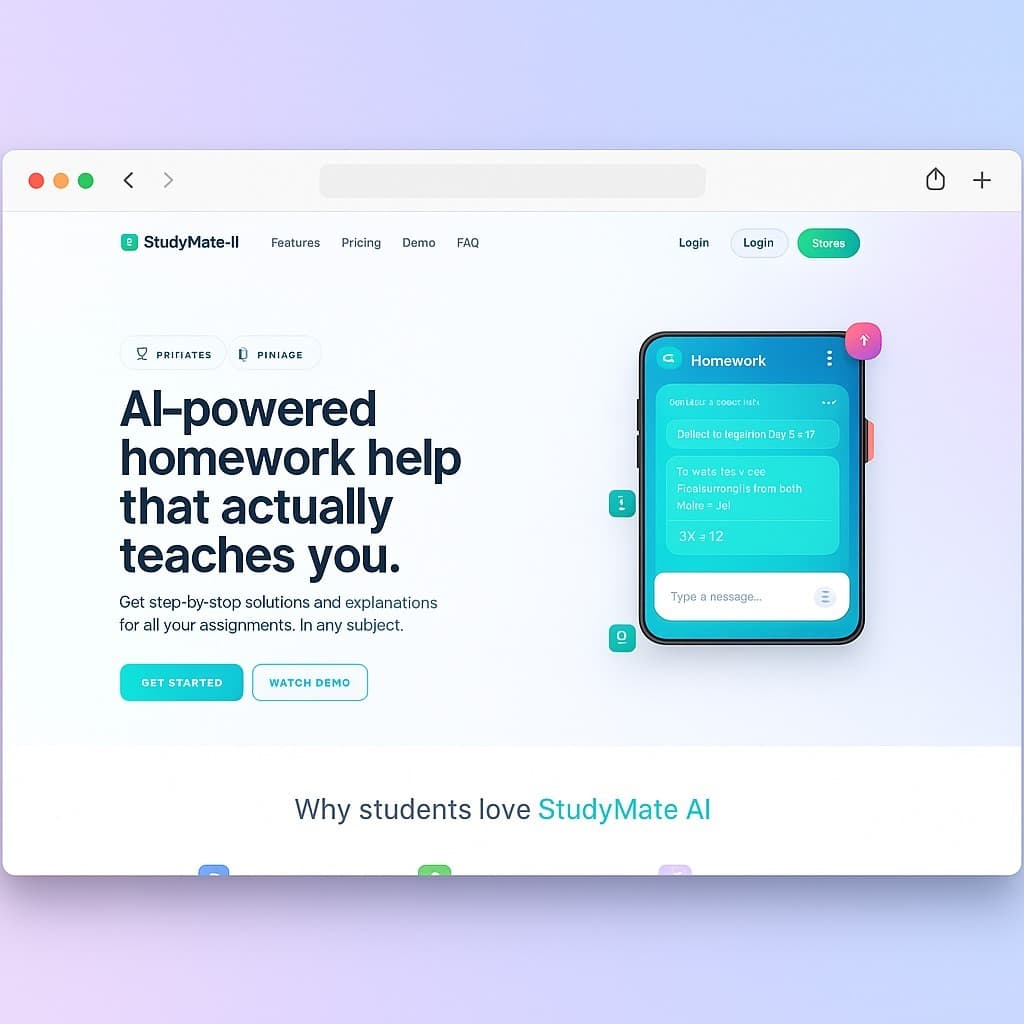
StudyMate's Safe Prompting Patterns for Education addresses these challenges by using AI in ways that promote learning rather than enable shortcuts. The system employs several key strategies: Socratic questioning (guiding students to discover answers through questions), educational guardrails (preventing direct answer provision), and rubric alignment (ensuring AI assistance supports learning objectives).
Socratic questioning is a foundational element of the system. Rather than providing direct answers, the AI asks guiding questions that help students think through problems step by step. For example, instead of telling a student the answer to a math problem, the system might ask "What information do you have?" or "What's the first step you should take?" This approach requires students to engage cognitively with the material, promoting genuine understanding and problem-solving skill development.
The system also provides hints and step-by-step guidance rather than complete solutions. When students are stuck, the AI might provide a partial hint that points them in the right direction without giving away the answer. This scaffolding approach supports learning while maintaining the challenge necessary for skill development. The system progressively reveals more information only if students continue to struggle, ensuring that students always have the opportunity to solve problems themselves first.
Educational guardrails prevent the system from providing direct answers or completing assignments for students. These guardrails are configurable based on assignment type, course policies, and learning objectives. For example, the system might be more restrictive during exams (providing minimal assistance) but more supportive during practice exercises (providing more guidance). This flexibility allows educators to balance learning support with academic integrity.
Rubric alignment ensures that AI assistance supports specific learning objectives rather than just helping students complete assignments. The system understands what skills and knowledge each assignment is designed to assess and provides assistance that develops those skills. For example, if an assignment is designed to teach problem-solving, the AI focuses on developing problem-solving approaches rather than just helping students get the right answer.
The system also encourages critical thinking by asking students to explain their reasoning, consider alternative approaches, and reflect on their problem-solving process. This metacognitive component helps students develop awareness of their own thinking, which is crucial for independent learning and skill transfer.
By using safe prompting patterns that teach rather than just provide answers, StudyMate promotes genuine learning, develops critical thinking skills, and maintains academic integrity. Students receive the support they need to succeed while being required to engage meaningfully with the material, ensuring that AI assistance enhances rather than replaces the learning process.
How it works
- Uses Socratic questioning to guide students to answers
- Provides hints and step-by-step guidance instead of direct answers
- Aligns prompts with educational rubrics and learning objectives
- Implements guardrails to prevent cheating
- Encourages critical thinking and problem-solving
Benefits
- Promotes genuine learning and understanding
- Prevents academic dishonesty
- Encourages critical thinking skills
- Aligned with educational standards
- Supports diverse learning styles
Implementation/Checklist
- Configure Socratic questioning templates
- Set up educational guardrails and restrictions
- Align prompts with curriculum rubrics
- Train educators on prompt strategies
- Monitor student interactions for effectiveness
- Refine prompts based on learning outcomes
FAQ
How does Socratic questioning work?
The system asks guiding questions that help students discover answers themselves, rather than providing direct solutions.
Can students still get help when stuck?
Yes. The system provides progressive hints and step-by-step guidance, ensuring students get support while still engaging with the learning process.